|
Nutritional Anthropology The
Bond Effect |
||||||||||||||||||||||||||||||||||||||||||||||||||||||||||||||||||||||||||||||||||||||||||||||
 |
DEADLY
HARVEST Between Our Health & Our Food GEOFF BOND |
Geoff Bond's |
||||||||||||||||||||||||||||||||||||||||||||||||||||||||||||||||||||||||||||||||||||||||||||
|
The most recent Newsletters are available by private subscription Now Buy the
Nutritional Anthropology's Bible: by Geoff Bond
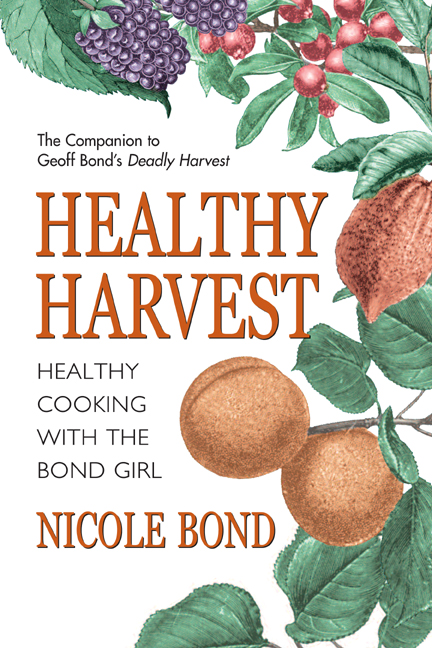
Healthy Harvest Information Page |
Chapter
6 At the beginning of this book, we painted a picture of our naturally adapted lifestyle. We saw how our ancient environment conditioned our bodies— and our very natures—for life on the savannas of east Africa. We called this lifestyle the “Savanna Model” and outlined how our ancient ancestors fed themselves for thousands of generations. This outline gives us the key to how we should be feeding ourselves today. It’s as if our bodies are an incredibly complex machine for which we have lost the operating instructions or “Owner’s Manual.” We can visualize the Owner’s Manual as an ancient parchment that generations of scribes have overwritten many times. By carefully clearing away the more recent layers, we can rediscover the original scripture. The purpose of subsequent chapters was to explore these newer layers and find out how they came to be there. By this means, we reveal the underlying message. In chapter 2, we saw how the naturally adapted feeding pattern changed dramatically with the farming revolution 11,000 years ago. Governments intervene to regulate our food supply with the laudable intention of keeping it “fit” for “human consumption,” but they’ve only had partial success. Governments also took it upon themselves to advise us how and what to eat, but much of this advice is flawed. In chapter 3, using our own, redefined food groups as a framework, we looked at the history of our current food supply. This examination highlighted just how far we have distanced ourselves from our ancestral origins and the consequences of this departure. In chapters 4 and 5, we looked at how other populations (Eskimos, Japanese, Cretans) around the world fare with their different diets. We put the microscope on how our bodies and biochemistry operate. By seeing what works well—and what works badly—we get strong pointers to the ideal feeding patterns for the human organism. We have now done enough to clear away all the overwritten layers of our Owner’s Manual. In this chapter, we show how the original scripture is revealed. Page 135 above Page 136 below THE IDEAL HUMAN FEEDING PATTERN
Blood Sugar Control
Acid-Alkali Balance
Owner’s Manual: Keep protein consumption modest (25% by weight) and keep non-starchy plant food and fruit consumption high (75% by weight). High Volume, High-Fiber, Low-Density Foods Page 136 Above Page 137 Below nature, low density: that is, they had few calories for their volume. A lettuce leaf, for example, is 95% water (the remaining 5% is a wonderful cornucopia of vital nutrients). In addition, plant food is rich in soluble plant fiber, the sort that our colons are designed to work with. The typical Western diet is the opposite: energy dense and low in fiber. Owner’s Manual: Consume high volumes of non-starchy plant foods and fruits. Low Sodium to High Potassium Ratio Owner’s
Manual: Avoid added salt in cooking, in processed foods, and at the
table. Healthy Fatty Acid Profile Nevertheless,
we need to note one further phenomenon. Depending on what creature or
plant they come from, some particular fatty acids are readily absorbed
by the body, and they are said to be “bioavailable.” There are other
foods that contain unsafe fatty acids, but these are not bioavailable.
We will make use of this knowledge when deciding what foods are safe and
which are harmful. This can produce surprising results, sometimes
contrary to what a simplistic analysis of their fatty acid composition
might indicate. Owner’s
Manual: Eat no more than 10% of calories as fat/oil. Focus on
consumption of bioavailable omega-3 fatty acids, reduce consumption of
bioavailable omega-6 fatty acids, and avoid foods with bioavailable
“bad” fatty acids. Page
137 above Page 138 Below High Micronutrient Content Owner’s
Manual: Consume non-starchy plant food and conforming fruits. Low Plant Poison (Antinutrient) Levels Low Antigen Content Owner’s
Manual: Avoid dairy and grains, which contain antigens. Feel Hungry Regularly However,
even if we cannot be skinny, there is a halfway house we should try to
achieve to make sure that the blood sugar control machinery functions
smoothly. Insulin is the sugar “locking up” hormone and its
counterpart, glucagon, is the sugar “unlocking” hormone. Glucagon
instructs fat cells to convert fat into sugar and release it into the
bloodstream. Lack of use often atrophies this vital function of our
biochemistry. Blood sugar levels have to be low and maintained low for
the glucagon mechanism to swing into action. That means feeling hungry
for about 30 minutes on a regular basis. Older people will remember that
this happened several Page
138 above Page 139 Below times a day before a main meal. Today, if people feel slightly hungry,
there is always a sugar-boosting snack within easy reach. Owner’s
Manual: Feel hungry for 30 minutes two or three times a day. OWNER’S MANUAL TABLE OF CONTENTS Basic Specifications Overview
of Implementation •
Consume a weight of conforming colored plant food that is about three
times the weight of conforming protein-rich food. This means consume an
abundance of non-starchy, colored plant foods and low-glycemic fruits,
while consuming protein-rich foods modestly. •
Eliminate salt added at the table and in processing or cooking. •
Consume fats and oils generally sparingly. In addition, eliminate
saturated fats in non-conforming foods, drastically curtail omega-6
oils, and boost consumption of omega-3 oils. •
Eliminate grains in all their forms. •
Eliminate potato in all its forms. •
Eliminate dairy products in all their forms. •
Eliminate processed foods. •
Feel hungry for at least 30 minutes two or three times a day. Page
139 above Page 140 Below Next,
we will discover which are the “conforming” plant foods and
“conforming” protein-rich foods that are readily available to us
today. We will answer the challenge of how to adapt the Savanna Model to
the food supply in the modern world. The choices are not always as
obvious as we might think. THE SAVANNA MODEL TODAY We
will categorize foods according to how closely they conform to the
Savanna Model. The classification is based on a traffic light system:
Green means “Go,” Amber (yellow) means “Caution,” and Red means
“Stop.” We introduce finer gradations, such as “Green-Amber,”
which means “Go, but proceed with caution.” Green-Green means
“Go-Go!”—these are superfoods which are particularly healthful. •
Green-Green: Perfect—in perfect conformity with the Savanna Model. •
Green: Conforming—in close conformity with the Savanna Model. •
Green-Amber: Comfort Zone—within the margin of tolerance for everyday
consumption by a healthy person. •
Amber: Slight Lapse—acceptable for a healthy person to consume on a
regular basis, provided the rest of the diet is conforming. •
Amber-Red: Modest Lapse—acceptable for a healthy person to consume on
an occasional basis, provided the rest of the eating pattern is
conforming. •
Red: Bad Lapse—not acceptable; avoid. Grains Grains
include wheat, rice, rye, barley, and oats, as well as the “ethnic”
grains such as amaranth and quinoa, and “authentic” grains such as
einkorn Page
140 above Page 141 Below and
emmer wheat. We also include the products made from grains: bread,
spaghetti, pizza, croissants, cookies, and so on. In
making this blanket condemnation, we hear protests in the background.
What about whole grains? What about oats, which the manufacturers sell
as lowering cholesterol? The reality is that marketing forces have
distorted the true perspective. Whole grains may contain useful
nutrients, such as wheat germ, but they are just as glycemic, the bran
contains even more antinutrients and antigens, and their content of
harsh insoluble fiber is not what the intestines need. Oats, of all the
grains, contain rather more soluble fiber than average, a quality that
manufacturers promote as cholesterol-reducing and therefore heart
healthy. This, nevertheless, is not a valid argument: they are still
glycemic, contain antinutrients and antigens, and are deficient in
micronutrients. Oats are no alternative to proper plant food like
lettuce and avocado. The
human diet is far better off without any cereals and their products.
However, not all grains have all the same drawbacks and the way they are
prepared modifies, for better or for worse, these drawbacks. The
criteria used to categorize the Grains Group are: their effect on blood
sugar surges, their antinutrient content, their gluten content, and
their allergen content. They are all classified as “Red” in some
degree. The purist will not have them in the house.
Page 141 above Page 142 Below FOOD GROUP 1 GRAINS
Page 142 above Page 143 Below Starchy Plant Foods There
are some vegetables that are sugary, notably carrots and beets
(beetroot). For this reason, they were included with the starchy
vegetables. The glycemic index of carrots can vary considerably, but if
they are raw and mature, they have only a modest impact on blood sugar
levels. This is where we deploy the concept of glycemic load. Carrots
have a low calorie density, so you have to eat quite a lot before
triggering a glycemic reaction. Therefore, because we want to take in
their good micronutrients and fibers, we allow the carrot a small place
in our diet. Be wary, though, of carrot juice: it is more glycemic and,
because it is possible to quaff down a tumblerful in one go, it is easy
to overdose with carrot sugar. Beets are quite glycemic, but since they
are rich in certain antioxidants, they just creep into the “Amber”
category.
Since
we are recommending that you consume an abundance of conforming
non-starchy, colored plant foods, what plant foods are “conforming”?
They are foods that are low glycemic, rich in micronutrients and fiber,
and harmless with regard to antinutrients and antigens. Broadly, they
include most salad foods, such as lettuce, onions, cucumber, radish, and
mushrooms, and they also include colored vegetables, such as broccoli,
green beans, bell peppers (sweet peppers), and Brussels sprouts. These
are considered “Green-Green,” “Green,” and “Green-Amber.”
Under “Green-Green”, we have separated out the vegetables that have
the high concentrations of background micronutrients that our ancient
ancestors delighted in. You can have unlimited consumption of these
foods, and the ideal is up to 2 pounds (900 g) per day. Note
that we include “baby” sweet corn as a good salad vegetable. Unlike
its mature form, the grains in baby corn have not yet formed and it is
neither starchy nor glycemic. Tomatoes, because of their mild background
antinutrients, only receive qualified approval in the “Green-Amber”
category. Chili pepper and curry powder (particularly the “hot”
variety) are to be used sparingly if ever at all; they damage the colon
and make it leaky. Sauerkraut and other pickles receive a poor rating
because of their high salt content. Ketchup has several possible
ratings. The best is our own Savanna Model recipe (see our companion
cookbook). If not, speciality ketchups are commercially available which
use “safer” ingredients: tomatoes, canola oil, and fructose. We also
include a meat substitute made from fungus known as “mycoprotein.”
The manufacturer, Quorn, makes it available either in the raw state as a
Page 143 above Page 144 Below FOOD
GROUP 3 VEGETABLES, NON-STARCHY
FOOD
GROUP 3 VEGETABLES, NON-STARCHY (continued) Fruits Fructose. Fructose, although kind to blood sugar levels, is not
without dangers. Professor George Bray estimates that as long ago as
1997, the average American was consuming60 grams of fructose per day and
rising.192 Researchers find that a die thigh in fructose has drawbacks.
By “high in fructose,” they mean a massive intake of 100 grams (20
teaspoons) per day. Many teenagers can get to this level by the
consumption of just four 12-ounce cans of cola. At this level of
consumption, fructose undermines blood sugar control, provokes diarrhea
and bloating, and drives up glucose intolerance, blood pressure,
cholesterol, triglycerides, and insulin resistance.193 And let us not
forget that fructose is empty calories—the more you consume, the more
likely you are to get fat.
Page 145 above Page 146 Below • Borderline Glycemic Fruits. These fruits tend not only to be
relatively glycemic, but they also often have a correspondingly high
sugar content. It is good to incorporate them into the daily diet, but
keep their consumption modest. Examples are apple, pear, orange, and
strawberry. • High-Glycemic Fruits. Many
fruits, often of tropical origin, are high glycemic. They are not
pariahs, but we should not go out of our way to obtain them. If you find
a morsel or two in your fruit salad, swallow it down, it won’t poison
you. But do not consume these regularly or copiously. Examples are
watermelon, pineapple, and ripe banana. The
fruits classified as “Green” are mostly low-sugar berries; they are
often exceptionally good sources of antioxidants too. Cranberries, in
the raw state, are extremely nutritious and low in sugar. Unfortunately,
they are so astringent as to make the lips pucker up. For this reason,
cranberries are nearly always heavily dosed with sugar, either as a
jelly or stewed in sugar. This process converts a great fruit into a bad
one. Bananas become more sugary as they ripen; the greener you can stand
them, the better. FOOD GROUP 4 FRUITS
Page 146 above Page 147 Below Dairy Products Cheese
lovers have a slight consolation, as cheese is the least harmful: they
have less lactose and, seemingly, their bad fats are not readily
absorbed by the body. Cheese can be consumed modestly on the rare
occasion. When you commit this offense against the Savanna Model, make
sure that it is worth it—that the cheese is a really good one—and
savor every nibble slowly, spreading it carefully around the palate.
However, no platform of bread or cracker! FOOD
GROUP 5 DAIRY
Meat, Poultry, Eggs, and Fish Animal matter has formed a moderate part of the human diet for an
evolutionarily significant part of human history. As we have seen, the
type of animal matter was rather different. Here we make judgments about
the animal matter available to us today. The chief criterion is the
fatty acid profile—the quantity of fat and the types of fatty acids.
In addition, some variety meats (offal) can contain unhealthy amounts of
some substances; for example, iron and vitamin A in liver. • Farm Meat. Common farm meats, such as beef, pork, and lamb, have
become problem foods. The difficulty is their high fat content and the
harmful nature of the fat. Stockbreeders are beginning to work on
improving the nutritional nature of their herds, but for now we are
better off avoiding these meats and everything that is made from them.
In contrast, an uncommon farm animal, the goat, is acceptable. • Wild Game. In most instances, meat from various wild creatures has a conforming fatty acid profile. Truly wild game that feeds off what it finds in its natural Page 147 above Page 148 Below habitat is an approved animal matter and is fine to consume in
moderation. It will be low-fat and should have a good fatty acid
profile. This includes wild boar, moose, caribou, and bison. • Variety Meats (Offal). Our Pleistocene ancestors ate all parts
of a slain animal, but this did not happen all that often. Many of the
internal organs have wildly varying nutrient composition, depending on a
number of factors: what the animal ate recently, how it was raised, and
even its state of health. It is difficult, therefore, to generalize
about variety meats. They are usually rich in micronutrients not found
in such high concentrations in other sources. Variety meats are normally
all right to consume in moderate quantities on an occasional basis. Kidney,
tripe, and liver are low-fat meats, but liver in particular is heavily
loaded with vitamin A and arachidonic acid, both of which are harmful in
high doses; you should consume it with caution. Tongue, heart, and
brains are high fat meats, with much of the fat saturated, and brains
are particularly rich in cholesterol; eat these only occasionally. Not
many Americans eat variety meats as such, but they are still consuming
them without even realizing it. That is because meatpackers disguise
them as salami, hot dogs, luncheon meats, and sausage. These products
should definitely be avoided because they are high fat (most of it
unhealthy), salty, and often doctored with sulfur compounds to preserve
them. • Exotic Animal Matter. This category includes such creatures as
alligator, ostrich, emu, kangaroo, frogs’ legs, and escargots
(snails). The last two have a long, honorable tradition in France and
they all correspond very well to the kind of animal matter that our
Pleistocene ancestors ate all the time. Other exotic foods are making
their appearance, particularly bush tucker from Australia, which
corresponds to the food traditionally eaten by the Australian
Aboriginal. My wife and I have sat down with aborigines in Central
Australia to eat one of their delicacies, witchety grub. Lightly roasted
in the embers of a fire, the 3-inch-long caterpillar tastes rather like
sweet corn. • Poultry (Farm and Wild). The low-fat parts of farm fowl, such as
skinless chicken and turkey breast, are good in modest quantities. You
should reduce consumption of other parts as much as possible. All parts
of duck and goose are fine. Wild birds such as pheasant, grouse, and
pigeon are fully conforming. • Eggs. Our Pleistocene forebears consumed all kinds of eggs:
ostrich, bustard, duck, and anything else they could find. Hen’s eggs
come close, with a proviso— seek out eggs that are rich in omega-3
oils and it is preferable if they are also free range and organic. Duck,
turkey, quail, and goose eggs are good too. Industrially produced eggs
are a poor substitute and should not be consumed on a regular basis. • Seafood. All seafood is an acceptable component of the Savanna Model feeding Page 148 above Page 149 Below pattern. The “oily fish,” rich in omega-3 oils, are best, such as
wild salmon, sardines, and mackerel. Other fish and shellfish have an
excellent essential fatty acid profile and are also good. FOOD
GROUP 6 MEAT, EGGS, AND FISH
Page 149 above Page 150 Below Legumes Page
150 above FOOD
GROUP 7 LEGUMES—DRY BEANS, PEAS
Page 150 above Page 151 Below Nuts Nuts
should be raw and fresh. Regrettably, food manufacturers usually roast
and salt nuts to improve shelf life and taste. However, this destroys
useful nutrients and the salt is an unwelcome burden to the diet. Around
half the weight of a nut is oil, much of it omega-6 fatty acids. Nuts
are therefore calorie dense and tend to upset the omega-3 to omega-6
balance. For these reasons, nuts should be consumed in moderation. Those
classified “Green-Green” have a high omega-3 content. We make
special mention of walnuts, which have the exceptional property of being
rich in omega-3 oil. However, it is essential that the walnuts be fresh,
because their omega-3 oil turns rancid very easily and becomes an
oxidized fat particularly harmful to cardiovascular health. FOOD
GROUP 8 NUTS
Note: All nuts must be fresh, raw and
unsalted. Page 151 above Page 152 Below Fats and Oils The
general injunction is to consume oils sparingly. We should focus on
omega-3 oils. A prime example is canola (rapeseed) oil, which is readily
available in supermarkets. However, we recommend going for cold-pressed,
organic canola oil, if possible. Flaxseed oil has the highest
concentrations of omega-3s and is preferred if you can afford it. The
oil is fragile and needs to be kept in the refrigerator and consumed
within a few weeks. Other options are hempseed oil and walnut oil (make
sure it is not made from roasted walnuts). All these omega-3 oils should
only be used cold, for example, in a salad dressing. Omega-3 oils do not
resist heat very well and the oil oxidizes and becomes toxic. If you
need to heat the oil for cooking, then a monounsaturated (and thus
inert) oil is best, such as olive oil. The
human organism also needs a second class of oil, the omega-6s, in a
balanced ratio with the omega-3s. The trouble in the modern diet is that
omega-6 vegetable oils are in everything and thus overwhelm our omega-3
consumption. We must therefore avoid any unnecessary intake. For this
reason, you should strictly avoid knowingly consuming omega-6 oils, such
as sunflower oil, safflower oil, peanut oil, and corn oil. The
criteria we have used in our classification are: omega-3 content;
omega-6 to omega-3 ratio; and presence of harmful fatty acids, such as
palmitic acid and myristic acid. In all cases, they should be consumed
with restraint. We have included mayonnaise and spreads, but it makes a
big difference which oils they are made from. Check the labels and
reject products that are “Amber-Red.” Watch out for hydrogenated
fats in spreads and all kinds of processed foods. Page 152 above Page 153 Below FOOD
GROUP 9 FATS AND OILS
Page 153 above Page 154 Below A second class of sugars is based on
fructose, a naturally occurring, low glycemic sugar. They are not
glycemic and are admissible in moderation. Fructose itself is available
in powder and liquid form in many supermarkets and in health food
stores. It is present to a greater or lesser degree in honey. That is
why, depending on which flower the honey comes from, the honey changes
classes. The sugar from the agave plant is almost entirely fructose and
has a very low glycemic index. In contrast, high-fructose corn syrup is
a misnomer: it is as glycemic as table sugar itself. It is easy to
overdose even on fructose, so its consumption should be kept moderate. What
about artificial sweeteners? Researcher William Grant estimates that
150,000 American deaths a year can be attributed to sugar consumption.
This is a massive figure and it would be even more if the true causes of
all heart attacks, cancers, and other illnesses could be identified.
Just imagine the outcry if just one death could be attributed to the use
of an artificial sweetener. In a world where we sometimes have to choose
the lesser of two evils, substituting an artificial sweetener for sugar,
as a first step, is a move in the right direction. From a theoretical
point of view, Aspartame, saccharine, and other artificial sweeteners
never formed part of the Pleistocene diet. Nevertheless, government
authorities around the world have exhaustively tested them. If sugar had
been obliged to pass the same regulations as artificial sweeteners, the
authorities would have banned sugar as a dangerous substance. The purist
will wish, understandably, to eliminate all artificial sweeteners from
the diet. However, it is our view that they can form a very useful
support when weaning from sugar itself. Chocolate
which is made with a high percentage of cocoa solids (and therefore
little sugar) is low glycemic and contains many useful micronutrients;
it can be consumed in restrained quantities. Most other confectionary
items are high glycemic and devoid of useful nutrients; they usually
contain bad fats and dairy as well—the dreaded “Red” column for
them. Watch out for manufactured foods that claim to have “no sugar
added.” Often you are being duped: they are sweetened with apple or
grape juice concentrate, which are just as bad. Page 154 above Page 155 Below FOOD
GROUP 10 SUGARS AND SWEETENERS
Salt and Sodium Our
preoccupation is with the salt-to-potassium ratio. As we have previously
described, salt has moved from being absent in the human diet to
massively contaminating all aspects of our food supply. We are therefore
obliged to adopt a strategy of avoiding all salt, whether incorporated
in processed foods or added at the table or in cooking. These measures,
together with the high consumption of plant foods (which are rich in
potassium), will ensure that an optimum sodium-to-potassium ratio is
maintained. Page 155 above Page 156 Below Here,
we focus on external sources of salt. Not everyone realizes that garlic
salt is plain salt with garlic flavoring; regular stock cubes are over
50% salt; soy sauce is just liquid salt fermented with soybeans. The
“Amber” column contains some low-salt seasonings and also salt
substitute. Salt substitutes are based on potassium chloride rather than
sodium chloride. There are dangers in over-consuming potassium chloride
too, so although there is little or no sodium in salt substitutes (check
the ingredients label), they should only be consumed sparingly. FOOD GROUP 11 SALT AND SODIUM
Do
not forget that tea, herbal teas, and American coffee are valid thirst
quenchers.1 Cocoa is fine too, but make it with 100% cocoa powder (not
chocolate mix) combined with water or almond milk. If you like, use a
“Green-Amber” sweetener. The
“Amber-Red” and “Red” columns are dominated by high-glycemic
drinks, such as beer and colas, and by milk in its various forms. Milk
is simply not human food and is harmful to our biochemistry. The milk of
almonds (and other nuts) is a great alternative to regular milk,
particularly in cookery. Fruit juices, even when freshly made, are
glycemic—for this reason they get the “Amber” classification; it
is much better to eat the fruit itself. Watch out for tomato juice:
choose Page 156 above Page 157 Below brands
that are made from pure tomatoes and no salt. Sugar-sweetened carbonated
drinks and colas are high glycemic and disrupt bone building. Some
alcohol drinks can be tolerated, but do not go out of your way to start
consuming them if they are not already part of your diet. Beer is highly
glycemic and potentially allergenic. Dry wine is acceptable and
particularly red wine is mildly healthful when consumed in moderation.
One might be surprised at the moderate classification of spirits like
gin and whiskey. Most spirits are all right, especially if diluted in a
suitable, low-sugar mixer (for example, whisky and soda, gin and diet
tonic). Bear in mind that alcohol is empty calories and it disrupts your
body’s ability to burn fat, so you will struggle to lose weight if you
consume alcohol. FOOD
GROUP 12 BEVERAGES
Page 157 above Page 158 Below THE GOLDEN RULES FOR TODAY’S SAVANNA MODEL 1.
The food to which as a species we are primarily adapted is plant food.
Think big when planning volumes of salads and vegetables. Eat a minimum
of one large mixed salad per day. Consume up to 24 ounces (900 grams) of
salads and colored vegetables per day. Put vegetables at the center of
the plate (“Green” classes, Food Group 3). 2.
Prefer raw vegetables to cooked. When cooking, use steaming, blanching,
or stir-fry methods. 3.
Eat fruit every day. Consume at least 12 ounces (400 grams) of fruit per
day, but spread it out over several eating sessions (“Green”
classes, Food Group 4). 4.
The food to which as a species we are secondarily adapted is animal
matter. Think modest when planning servings of meat, poultry, eggs, and
fish (Food Group 6). 5.
Avoid red or fatty meat and their products (“Red” classes, Food
Group 6). 6.
Don’t overeat protein: limit consumption to about 10 ounces per day of
protein- rich foods. Concentrate on sources of “good” proteins
(“Green” classes, Food Groups 6 and 8). 7.
Avoid dairy products (All classes, Food Group 5). 8.
Be frugal with fats and oils, even the “Green” classes. If cooking
at high temperatures, only use olive oil. Replace “Red” classes of
fats and oils with “Green” classes such as canola (rapeseed) oil,
walnut, hemp, and flax oils (Food Group 9). 9. Avoid the use of salt in
cooking and at the table (Food Group 11). 10.
Avoid all manufactured (processed) food. Be wary of anything that comes
in a packet, can, jar, bottle, or box. Be wary of anything that has an
ingredient label—read the fine print on the label and act on it! 11.
There is no need to count calories with the Savanna Model. You can eat
to satiety provided these rules are followed. Your body, now receiving
the correct fuel supply, will do the rest. 12.
Feel hungry for at least 30 minutes two or three times a day |
|||||||||||||||||||||||||||||||||||||||||||||||||||||||||||||||||||||||||||||||||||||||||||||